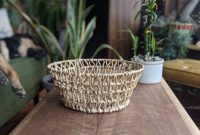
Decoupage trays, a captivating blend of artistry and practicality, offer a unique way to personalize your home. From rustic charm to modern minimalism, these trays seamlessly integrate decorative flair with functional utility, transforming ordinary surfaces into exquisite pieces of art.
This comprehensive guide explores the diverse world of decoupage trays, covering everything from crafting techniques to sourcing supplies, design inspiration, and maintenance. Discover how these versatile trays can elevate any space, whether used for serving, storage, or simply as a statement piece.
Introduction to Decoupage Trays
Decoupage trays, a versatile craft project, transform ordinary trays into unique decorative pieces. The technique involves layering decorative elements onto a surface, typically a tray, and then sealing them for a lasting finish. This process allows for personalized designs, incorporating various styles and materials, and offers a creative outlet for artisans and hobbyists.The core principle of decoupage lies in the combination of decorative elements, usually images or patterns, with a base material.
This intricate layering and sealing process yields durable and aesthetically pleasing results. Decoupage trays offer a tangible embodiment of artistic expression, transforming functional items into personalized works of art.
Materials Commonly Used
The choice of materials for decoupage trays is diverse, influenced by the desired aesthetic and durability. Commonly used materials include trays themselves, typically made of wood, metal, or plastic. Paper, in various forms like napkins, wallpaper scraps, and printed images, forms the basis for the decorative layers. Adhesives, such as decoupage glue, are crucial for securing the decorative elements to the tray.
Additional materials include sealant, often a varnish or acrylic spray, to protect the finished piece and enhance its longevity. Tools like brushes, scissors, and sandpaper contribute to the preparation and application process.
Styles and Designs
Decoupage trays exhibit a broad spectrum of styles and designs, reflecting the creativity of the artisan. Styles range from traditional floral patterns and vintage motifs to contemporary abstract designs. The chosen style often mirrors the artist’s personal preference and the intended use of the tray. The incorporation of colors, textures, and patterns contributes significantly to the visual appeal.
Examples include rustic-inspired trays featuring aged-look paper, or modern trays with geometric shapes and bold colors.
Techniques for Decoupage Tray Creation
The process of creating decoupage trays involves a series of carefully executed steps. First, the tray is prepared by ensuring a smooth surface. Next, the chosen decorative elements, like paper cutouts or images, are carefully positioned on the tray. Decoupage glue is applied to the back of the elements and then gently pressed onto the tray. Once the adhesive is fully dry, additional layers of sealant are applied to protect the design and improve its durability.
This process often involves multiple layers of sealant to ensure a robust and lasting finish. Different techniques, such as distressing or adding embellishments, can further enhance the tray’s aesthetic appeal. The choice of technique and materials often dictates the final appearance and longevity of the decoupage tray.
Decoupage Tray Types and Variations
Decoupage trays, once a niche craft, have surged in popularity, offering a unique blend of artistry and practicality. Their adaptability extends beyond simple decorative pieces, transforming into functional storage and presentation solutions. This evolution is driven by the diverse array of styles and materials employed in their creation.Beyond the aesthetic appeal, decoupage trays provide a versatile platform for expressing creativity and personal style.
Different approaches to design, materials, and shapes contribute to the rich tapestry of this craft, appealing to a broad spectrum of tastes.
Decoupage Tray Types
Decoupage trays encompass a spectrum of styles, each with its own distinct characteristics. Understanding these variations allows for a more informed appreciation of the craft.
| Type | Description | Materials | Examples |
|---|---|---|---|
| Rustic | Characterized by a natural, earthy aesthetic, often incorporating distressed wood finishes and natural elements. | Wood, fabric, paper, paints, and natural materials like twigs or flowers. | Trays with aged wood surfaces, embellished with burlap or floral appliqués. |
| Modern | Emphasizes clean lines, geometric shapes, and contemporary color palettes. | Metal, glass, or smooth wood, combined with bold prints or minimalist designs. | Trays with sleek metal frames, featuring geometric decoupage or abstract patterns. |
| Vintage | Inspired by antique or retro designs, often recreating the look and feel of vintage objects. | Wood, metal, or ceramic, embellished with vintage-inspired prints or textures. | Trays with aged metal finishes, featuring floral patterns or vintage maps. |
| Coastal | Captures the essence of the ocean with seashells, nautical motifs, and light color palettes. | Wood, painted surfaces, seashells, and nautical-themed papers. | Trays with distressed wood, embellished with seashells, rope, and sailboats. |
Decoupage Tray Styles Comparison
Different decoupage styles offer distinct aesthetic experiences. This comparison highlights the key characteristics of various styles.
| Style | Key Characteristics | Color Palette | Common Motifs |
|---|---|---|---|
| Rustic | Natural tones, distressed finishes, organic shapes. | Earthy tones (browns, creams, greens). | Floral patterns, wood grain textures, burlap. |
| Modern | Clean lines, geometric shapes, bold colors. | Monochromatic palettes, contrasting colors. | Geometric patterns, abstract designs, minimalist graphics. |
| Vintage | Reinterpretations of antique styles, aged finishes, nostalgic themes. | Pastel tones, muted colors, sepia tones. | Floral prints, vintage maps, antique illustrations. |
Common Decoupage Tray Motifs
Recurring themes add depth and personality to decoupage trays. The choice of motifs often reflects personal preferences and cultural influences.
- Floral motifs are frequently used, adding a touch of natural beauty and elegance.
- Geometric patterns provide a contemporary aesthetic, offering a sense of order and structure.
- Vintage illustrations and prints evoke a sense of nostalgia and history.
- Cultural motifs, such as traditional patterns from various cultures, provide unique character and insight.
Cultural Influence on Decoupage Tray Styles
Decoupage trays, like other crafts, are shaped by cultural traditions and artistic movements. Understanding these influences provides insight into the creative process.
- Asian cultures, with their rich history of intricate patterns and designs, frequently inspire decoupage trays with their intricate designs.
- European traditions, characterized by intricate details and classical themes, often find their way into the decorative motifs of decoupage trays.
- American folk art traditions often use imagery that resonates with national heritage and artistic styles.
Unusual Decoupage Tray Shapes and Sizes
Beyond the standard rectangular or square trays, creative designers explore a wide range of unusual shapes and sizes.
- Round trays, with their flowing contours, offer a sense of fluidity and grace.
- Oval or irregular shapes, with their unique silhouettes, add a touch of asymmetry and visual interest.
- Large trays, suitable for displaying collections or serving platters, offer substantial surface areas.
- Small trays, perfect for holding jewelry or other small items, provide a miniature canvas for artistic expression.
Decoupage Tray Techniques and Methods
Transforming a simple tray into a captivating piece of décor requires a methodical approach. Understanding the nuances of surface preparation, application, and finishing is key to achieving a professional and aesthetically pleasing result. Proper technique ensures longevity and enhances the visual appeal of the final decoupage tray.Mastering decoupage tray techniques hinges on precision and patience. A well-executed project combines artistry with the application of appropriate tools and materials.
This involves careful preparation of the tray surface, precise application of decoupage paper, strategic placement of decorative elements, and a final sealing and finishing touch.
Preparing the Tray Surface for Decoupage
Thorough surface preparation is critical for a successful decoupage project. A clean, smooth, and primed surface ensures that the decoupage paper adheres properly and that the final product exhibits a consistent aesthetic. This process typically involves cleaning the tray with a degreaser to remove any dust, grease, or other contaminants. Subsequently, sanding the surface to create a slightly rough texture helps the adhesive to grip.
For optimal adhesion, a primer coat is applied to the surface before decoupage paper application.
Applying Decoupage Paper to the Tray
Precise application of decoupage paper is crucial to achieving a flawless finish. The decoupage paper should be carefully positioned on the tray, aligning the design elements to create a cohesive composition. Applying a thin layer of decoupage medium, using a brush, over the paper secures it to the surface. Ensure the medium is evenly distributed, avoiding any visible drips or streaks.
Allowing sufficient drying time between layers helps prevent wrinkles and ensures a durable finish.
Adhering Decorative Elements to Decoupage Trays
A wide array of decorative elements can enhance the appeal of decoupage trays. These range from intricate embellishments to simple embellishments. For example, ribbons, buttons, beads, or other small embellishments can be strategically placed onto the decoupage paper. Adhesive, such as decoupage glue or craft glue, is used to affix these elements. Careful placement and application are key to preventing the elements from shifting or detaching later.
Methods of Sealing and Finishing Decoupage Trays
Sealing and finishing steps protect the decoupage tray and add a professional polish. Several techniques can achieve this, including applying multiple coats of decoupage varnish or sealant. Allow ample time between coats for each to dry fully. This prevents potential cracking or flaking of the finish. A final clear coat of sealant provides an additional layer of protection, safeguarding the artwork from scratches and moisture.
Using the Right Tools for Decoupage Tray Projects
A selection of appropriate tools is essential for a successful decoupage project. A high-quality decoupage medium ensures the proper adherence of the paper to the tray. A fine-tipped brush allows for precise application of the medium and the placement of decorative elements. Sandpaper of various grits allows for smoothing and achieving a consistent surface texture. Additional tools such as scissors, tweezers, and craft knives facilitate precise cutting and placement of embellishments.
A clean workspace is also essential to maintain the quality of the project.
Materials and Supplies for Decoupage Trays
Decoupage tray projects offer a canvas for creativity, but the success hinges on the careful selection of materials. Choosing the right components, from papers to adhesives, directly impacts the tray’s aesthetic appeal and longevity. A well-considered approach ensures the project delivers a beautiful and enduring result.
Essential Materials for Decoupage Trays
The success of a decoupage tray hinges on the proper selection of materials. Each component plays a critical role in achieving a desired aesthetic and functional outcome. Careful consideration ensures the final product is both visually appealing and durable.
| Material | Description | Uses |
|---|---|---|
| Tray | The base of the decoupage project. A variety of materials, such as wood, metal, or plastic, are suitable depending on the desired aesthetic. | Provides the surface for decoupage application. |
| Decoupage Paper | A wide range of papers with diverse textures and finishes, essential for creating intricate designs. | Offers visual appeal and patterns to the tray. |
| Adhesive | A specialized decoupage glue, often a matte finish, is crucial for secure and even application of decoupage paper. | Binds decoupage paper to the tray surface, ensuring longevity. |
| Mod Podge or Similar | A sealant, commonly used as a topcoat, enhances the tray’s durability and aesthetic appeal. | Protects the decoupage, creating a smooth and glossy finish. |
| Scissors or Craft Knife | Essential for precise cutting and trimming of decoupage paper. | Allows for intricate designs and clean edges. |
| Paintbrushes | Varying sizes and shapes, crucial for applying adhesive and sealant evenly. | Enables precise application of materials, minimizing imperfections. |
| Sandpaper | Various grits, for smoothing surfaces and creating a consistent texture. | Prepares the tray for decoupage, ensuring a smooth surface. |
Choosing the Right Decoupage Papers
Decoupage papers come in a vast array of styles, textures, and finishes. The choice directly impacts the overall aesthetic of the tray. Consider the desired look and feel when selecting decoupage papers.
- Printed Papers: These papers often feature pre-printed images, patterns, or designs. The variety of styles ensures a wide range of possibilities for creating diverse tray designs.
- Embossed Papers: These papers feature raised or indented designs, adding depth and visual interest. The intricate patterns create a tactile element, enhancing the tray’s overall aesthetic appeal.
- Metallic Papers: These papers offer a glamorous and sophisticated look, adding a touch of elegance to decoupage trays. The metallic finish creates a unique shimmer and highlights the design.
- Textured Papers: These papers offer a range of textures, from linen to wood grain, adding visual interest and depth to the tray. The variations in texture create distinct patterns, enhancing the artistic value of the project.
Alternative Materials for Decoupage Trays
Beyond traditional decoupage materials, a range of alternatives can be used to create unique and innovative tray designs. These alternative materials expand the creative possibilities for decoupage projects.
- Fabric Scraps: These can be used to create intricate patterns and textures on the tray, adding a touch of personalization.
- Dried Flowers or Leaves: These natural elements can be incorporated for a rustic and organic look, adding a unique touch to the decoupage tray.
- Embellishments: Beads, sequins, or other embellishments can be used to add a touch of sparkle and dimension to the decoupage tray, enhancing the artistic flair.
Specialized Tools for Decoupage Trays
Specialized tools are crucial for achieving precise and consistent results in decoupage tray projects. Using the appropriate tools can significantly enhance the quality and aesthetic appeal of the finished product.
- Craft Knife: Allows for precise cutting and trimming of paper or other materials, essential for intricate designs.
- Craft Glue: Specialized glues are better suited for decoupage than general-purpose adhesives, ensuring a secure bond and preventing warping.
- Different Paintbrushes: Choosing brushes of various sizes and shapes allows for even application of adhesive and sealants, minimizing imperfections.
Decoupage Tray Design Inspiration

Decoupage trays, with their customizable nature, offer a canvas for artistic expression. Beyond the practical function of a serving tray, they can become statement pieces that reflect personal style and enhance the aesthetic of any home. This section delves into diverse design inspirations, offering practical guidance for creating unique and captivating decoupage tray designs.Decoupage tray design is deeply personal.
The key to a successful design is selecting a theme or color palette that resonates with the creator’s style. This can be achieved by carefully considering personal preferences and aligning them with the desired aesthetic. Successful designs, therefore, not only showcase intricate techniques but also tell a story, often a personal one.
Color Palettes and Themes
Color palettes and themes play a critical role in establishing the overall mood and character of a decoupage tray. Choosing a harmonious combination of colors that complements the surrounding décor is crucial. Consider using a color wheel to identify complementary and analogous color schemes.
- Rustic charm: Earthy tones like terracotta, cream, and muted greens, often combined with natural wood tones, evoke a sense of warmth and tranquility. This theme works well with floral or nature-inspired decoupage elements.
- Modern elegance: Clean lines, sleek geometric shapes, and a minimalist approach to color palettes, often incorporating metallic accents, create a contemporary aesthetic. This style often features geometric patterns or abstract designs.
- Coastal serenity: Soft blues, creams, and sandy beige, along with nautical-inspired imagery, evoke a relaxing atmosphere reminiscent of the ocean. This can be paired with starfish, seashells, or beach-themed patterns.
- Bohemian flair: Vibrant colors, intricate patterns, and a mix of textures are characteristic of this style. Use a range of colors like jewel tones, warm oranges, and rich browns, often paired with macrame or tribal patterns.
Successful Decoupage Tray Designs
Numerous examples showcase the versatility of decoupage tray designs. Successful designs often incorporate a cohesive theme, a balanced color palette, and thoughtful material selection.
- A tray featuring a vintage-inspired floral design in a muted color palette, paired with a distressed wooden base, creates a nostalgic atmosphere.
- A tray with a modern geometric pattern in a sleek black and white color scheme, with metallic accents, elevates a dining area.
- A tray showcasing a nautical scene, with seashells and starfish incorporated, adds a coastal touch to a bathroom or entryway.
Adapting Existing Designs
Adapting existing designs allows for unique decoupage tray creations. This involves modifying color schemes, incorporating different textures, and selecting alternative decoupage elements.
- Modifying a floral design to feature different flower types and colors can create a unique piece.
- Substituting a rustic wood base for a painted metal one can transform a design from rustic to modern.
- Incorporating a different style of decoupage element, like fabric or lace, adds a unique texture and pattern.
Personal Style in Design
Choosing a design that reflects personal style is paramount. The tray should resonate with the individual’s aesthetic preferences, enhancing the overall ambiance of the space.
- A love for vintage elements might lead to a tray featuring antique-inspired patterns and colors.
- An affinity for nature may manifest in a tray showcasing natural elements and color palettes.
- A modern approach might be reflected in a tray featuring geometric patterns and a sleek color scheme.
Decoupage Tray Design Examples
These examples showcase distinct designs and highlight the interplay of materials, techniques, and themes.
| Design | Materials | Techniques | Theme |
|---|---|---|---|
| Vintage Floral | Wooden tray, floral paper, decoupage medium, varnish, distressed paint | Decoupage, distressing, glazing | Nostalgia, rustic charm |
| Modern Geometric | Metal tray, patterned paper, metallic paint, Mod Podge, sealer | Decoupage, metallic accents, layering | Contemporary, elegance |
| Coastal Seascape | Wooden tray, blue/white paper, seashells, decoupage medium, sealant | Decoupage, layering, embellishment | Relaxation, coastal serenity |
Decoupage Tray Projects and Tutorials
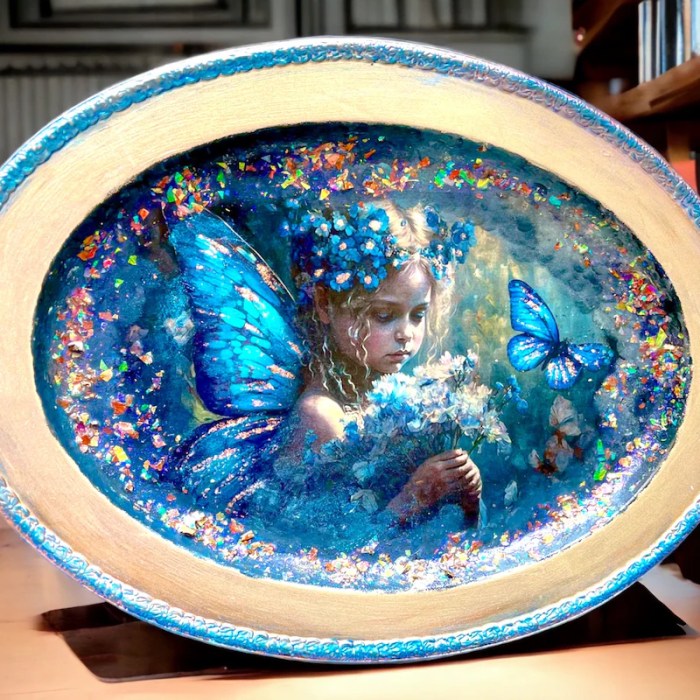
Transforming plain trays into captivating centerpieces or functional storage solutions is a rewarding craft. Decoupage, a technique of decorating surfaces with layered designs, unlocks limitless possibilities for tray customization. This section delves into practical projects and tutorials, providing step-by-step instructions for creating diverse decoupage trays, from simple to sophisticated.
Basic Decoupage Tray Project
This tutorial Artikels the fundamental steps for creating a basic decoupage tray. Begin by thoroughly cleaning and preparing the tray’s surface, ensuring a smooth application of the decoupage medium. Carefully select your design elements, which could be patterned papers, fabric scraps, or even photographs. Apply a thin layer of decoupage medium to the tray and adhere the design.
Overlapping layers of design can create a textured effect. Once the design is in place, apply a protective top coat of varnish to preserve the finished product. For optimal results, ensure each layer of decoupage medium is fully dry before applying the next.
Tiered Decoupage Tray Tutorial
Creating a tiered decoupage tray requires meticulous planning and execution. First, assemble the tiered structure. Ensure the tiers are stable and securely attached. Next, prepare the decoupage medium and select your design elements. Apply the decoupage medium to each tier, carefully adhering the design.
For a cohesive look, maintain consistency in the design across all tiers. Finally, apply a protective layer of varnish to safeguard the finish and maintain its aesthetic appeal. The use of stencils or templates can create intricate patterns on the tiered tray, enhancing its visual appeal.
Decoupage Tray Tutorial: Stenciling Technique
Stenciling offers a unique approach to decoupage, enabling intricate designs on trays. Begin by selecting a suitable stencil and a design that complements the tray’s aesthetic. Prepare the tray’s surface with a primer or decoupage medium for better adhesion. Carefully position the stencil on the tray and apply decoupage medium using a brush or sponge. Ensure even coverage within the stencil’s design.
Allow the decoupage medium to dry completely before removing the stencil. The use of different colors and layers of decoupage medium allows for a multifaceted effect. Experimenting with varying stencil sizes and shapes can lead to unique and eye-catching results.
Decoupage Tray Project Ideas Table
This table provides a diverse range of decoupage tray project ideas, categorized by difficulty level.
| Project Idea | Difficulty Level | Description |
|---|---|---|
| Rustic Farmhouse Tray | Beginner | Simple decoupage design using burlap and distressed wood stain. |
| Elegant Floral Tiered Tray | Intermediate | Intricate floral designs on multiple tiers using various decoupage techniques. |
| Geometric Patterned Tray | Intermediate | Abstract geometric patterns using stencils and decoupage medium. |
| Personalized Gift Tray | Advanced | Customizable tray with personalized images and messages. |
| Coastal Themed Tray | Beginner | Simple decoupage design using seashells and beach-themed papers. |
Customizing a Basic Decoupage Tray Design
Beyond the basic steps, customizing a decoupage tray involves exploring various techniques. Adding embellishments such as beads, ribbons, or metallic accents can elevate the tray’s aesthetic appeal. Incorporating different decoupage mediums, such as fabric or textured papers, introduces a unique dimension to the design. The use of paints and markers allows for adding intricate details and patterns.
Experimenting with color palettes and varying design elements creates a personalized and unique piece.
Troubleshooting Decoupage Tray Projects
Decoupage, while a rewarding craft, can present unexpected challenges. Understanding common pitfalls and possessing effective troubleshooting strategies is crucial for achieving flawless results. This section delves into the potential problems encountered during decoupage tray projects, offering practical solutions and preventive measures.The delicate nature of decoupage, involving layering and adhering various materials, necessitates meticulous attention to detail. Even minor errors in technique or material application can significantly impact the final product’s aesthetic appeal and longevity.
Knowing how to diagnose and rectify these issues ensures a positive decoupage experience.
Common Decoupage Issues
A crucial aspect of successful decoupage lies in anticipating and addressing potential problems proactively. Recognizing common issues allows for swift and effective corrective actions, preserving the integrity of the project and minimizing wasted materials. This section Artikels several common issues, providing tailored solutions.
- Lifting or Peeling Decoupage Elements: Improper adhesion of decoupage elements is a frequent problem. Factors such as inadequate sizing, insufficient pressure during application, or using unsuitable glue types can lead to elements lifting or peeling off the tray surface over time. Applying a strong, water-resistant decoupage medium or a layer of sealant over the decoupage elements can prevent lifting and peeling.
Additionally, ensuring the tray surface is clean and completely dry before applying the decoupage elements is critical.
- Uneven or Blotchy Decoupage Application: An uneven application of the decoupage medium or glue can result in an unsightly finish. Maintaining consistent application pressure and ensuring the decoupage medium is evenly distributed across the tray’s surface is paramount. Thinning the decoupage medium, if necessary, can improve its spreadability, promoting a smoother, more even finish.
- Cracks or Tears in Decoupage Elements: Fragile or improperly handled decoupage elements can crack or tear. Using strong, but gentle, pressure while applying decoupage elements can help prevent tears. Ensuring the elements are properly supported during the application process also minimizes the risk of cracking. Using a protective sealant can further reinforce the decoupage layer and prevent future damage.
- Bubbles or Air Pockets Under Decoupage Elements: Air bubbles trapped beneath decoupage elements can mar the final product’s appearance. Pressing the elements firmly onto the surface while applying decoupage medium and removing any trapped air with a needle or similar tool is crucial. Working in a well-ventilated area can help reduce the presence of air bubbles. Applying a thin layer of decoupage medium can help minimize the appearance of air pockets.
Addressing Tray Surface Issues
The tray’s condition significantly impacts the decoupage process’s success. Thorough preparation of the tray surface is vital to achieving a professional-looking finish. This section addresses potential tray surface problems.
- Uneven or Rough Surfaces: An uneven tray surface can affect the final decoupage’s appearance. Sanding or smoothing the tray surface using fine-grit sandpaper can create a uniform base. Using wood filler or putty for deeper imperfections ensures a smooth surface. Applying several thin coats of decoupage medium can help even out a rough surface.
- Wax or Residue on the Tray: Wax or other residues on the tray surface can hinder proper adhesion. Cleaning the tray with appropriate cleaning solutions to remove all residues is essential. Using a degreaser or a specialized cleaning solution tailored for the tray’s material can help remove wax or other residues.
- Damaged or Worn Tray: A tray with significant damage or wear can impact the decoupage’s longevity. Repairing any cracks or dents with appropriate materials, such as wood filler or epoxy, is necessary. If the damage is severe, a replacement tray might be required.
Fixing Decoupage Mistakes
While meticulous preparation can prevent errors, sometimes mistakes occur. Learning to fix these errors promptly and efficiently is crucial for a satisfying decoupage experience.
- Fixing Small Mistakes: Small errors, such as a misplaced element or a minor imperfection, can be addressed by carefully removing the problematic element and reapplying it. Using a damp cloth or a precision tool can help remove the element without damaging the surrounding decoupage.
- Correcting Larger Errors: Larger mistakes may require more significant corrective measures. Removing the affected area, re-applying the decoupage medium, and re-applying the elements in the desired configuration is crucial. Using a sealant can reinforce the corrected area.
Decoupage Tray Applications and Uses
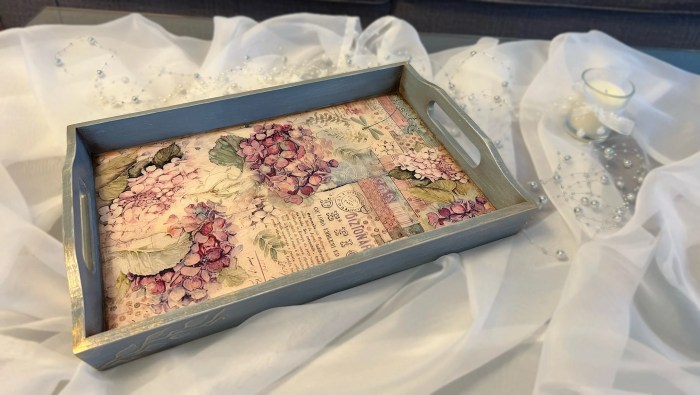
Decoupage trays, with their customizable aesthetic and tactile appeal, offer a wide range of applications beyond mere decoration. Their versatility extends from serving essentials to sophisticated storage solutions, transforming everyday items into personalized statement pieces. This exploration delves into the diverse uses of decoupage trays, examining their suitability for various settings and occasions.Decoupage trays transcend traditional serving or storage roles, providing a platform for creative expression and personalized home décor.
Their unique charm lies in their ability to seamlessly integrate artistic flair with practical functionality, making them ideal for a wide range of applications. From intimate gatherings to formal events, these trays can elevate any setting with their distinctive appeal.
Serving Trays
Decoupage trays excel as serving trays, particularly for presenting appetizers, desserts, or drinks. Their varied designs can complement diverse culinary styles and thematic settings. Their visually appealing surfaces enhance the presentation of food, creating an inviting atmosphere. The durability of the decoupage finish, combined with careful selection of materials, allows these trays to withstand daily use.
Decorative Trays
Beyond serving, decoupage trays can act as striking decorative elements. They can be strategically positioned on tables, shelves, or mantles to add a touch of visual interest and personal style. The intricate designs and vibrant colors can draw attention and create focal points in any room.
Storage Trays
The utility of decoupage trays extends to organizing and storing items. They can hold keys, jewelry, remotes, or small decorative items, offering a stylish alternative to traditional storage solutions. The diverse designs provide ample opportunities to personalize storage spaces, reflecting the owner’s unique taste.
Giftware and Special Occasions
Decoupage trays make exceptional gifts for various occasions. Personalized designs, crafted with care, can create memorable and thoughtful presents. Their beauty and functionality combine to make them treasured keepsakes. For special occasions, decoupage trays can be incorporated into themed settings, such as weddings or parties, to further enhance the ambiance.
Kitchen Applications
In the kitchen, decoupage trays can be used for serving breakfast items, arranging condiments, or presenting small culinary masterpieces. Their aesthetic appeal elevates the kitchen’s overall design and functionality. For example, a decoupage tray featuring a floral pattern could be used to hold fresh fruit, while a tray with a rustic design might serve as a stand for a ceramic coffee set.
Bathroom Applications
In the bathroom, decoupage trays can be used to organize toiletries, store bath products, or display decorative items. Their delicate and artistic nature adds a touch of sophistication and personalization to this space. For example, a tray with a nautical theme could hold bath salts and lotions, while a tray with a nature-inspired design could be used to hold soaps and other toiletries.
Comparison with Other Options
Compared to traditional serving or storage options, decoupage trays offer a unique blend of aesthetic appeal and functionality. While glass or ceramic trays provide durability and versatility, decoupage trays offer an extra layer of customization and personalization. Their artistic touch and hand-crafted nature make them stand out from more standard options. The visual impact of a decoupage tray can significantly enhance a space, providing a unique personality.
Decoupage Tray Maintenance and Care
Preserving the artistry and longevity of decoupage trays requires meticulous care. Proper maintenance ensures that these decorative pieces remain beautiful and functional for years to come, enhancing the charm of any space. Ignoring these essential steps can lead to premature deterioration and a diminished aesthetic appeal.Careful cleaning and protection are crucial for maintaining the integrity of decoupage trays.
Different materials and techniques used in the decoupage process influence the best approach to care. Understanding these nuances ensures the longevity of your investment.
Cleaning Decoupage Trays
Maintaining the pristine appearance of decoupage trays hinges on a gentle approach to cleaning. Aggressive scrubbing or harsh chemicals can damage the delicate layers of the decoupage, potentially causing peeling or discoloration.
- Use a soft, damp cloth to wipe away dust and smudges. Avoid using abrasive sponges or cloths that could scratch the surface.
- For more stubborn stains, use a mild dish soap solution, diluted to avoid harshness. Apply the solution sparingly to the affected area and wipe gently with a soft cloth.
- Rinse thoroughly with clean water and dry immediately with a soft, lint-free cloth to prevent water spots.
- Avoid using excessive water, as this can potentially damage the adhesive holding the decoupage layers together.
Protecting Decoupage Trays from Damage
Protecting decoupage trays from potential damage involves strategic placement and preventive measures. Knowing how to handle and store these pieces safeguards their intricate designs.
- Avoid placing hot or cold items directly onto the tray. Use coasters or trivets to protect the surface from thermal shock.
- Handle trays carefully to prevent scratches or dents. Avoid dropping or placing heavy objects on them.
- Store trays in a cool, dry place, away from direct sunlight or extreme temperatures to minimize potential warping or cracking.
- Consider using protective coverings, such as clear plastic sheets or fabric, when storing trays to further safeguard them from dust and scratches.
Addressing Damage to Decoupage Trays
Addressing minor damage to decoupage trays can often be tackled effectively. A timely response can prevent further deterioration and preserve the tray’s aesthetics.
- Small chips or scratches can sometimes be concealed with a touch of decoupage glue and a matching paper or fabric piece. Apply the repair discreetly to blend seamlessly with the existing design.
- For more extensive damage, consider consulting a professional decoupage artist. They possess the expertise to assess the damage and implement suitable repair techniques.
- If the damage is substantial, replacing the tray with a similar design might be a suitable option to maintain the overall aesthetic appeal.
Moisture and Environmental Protection
Protecting decoupage trays from moisture and environmental factors is essential for preserving their long-term beauty. Humidity and temperature fluctuations can impact the adhesive and materials used.
- Store trays in a climate-controlled environment, avoiding areas with high humidity or direct exposure to moisture.
- Use protective covers to shield trays from dust, dirt, and other environmental contaminants.
- If possible, store trays in a climate-controlled environment to maintain stable temperatures and humidity levels.
Preserving the Beauty of Decoupage Trays
Regular care and protection are key to preserving the beauty of decoupage trays. Understanding these practices ensures the longevity of your investment and the enjoyment of their artistic value.
- Regular cleaning and inspection will help identify any issues early on, allowing for prompt intervention.
- Regularly assessing the tray’s condition allows for prompt action to address any emerging problems.
- Adhering to these preventative measures will help maintain the aesthetic integrity of the tray.
Sourcing Decoupage Tray Supplies
The burgeoning decoupage tray market presents a wealth of choices for crafting unique pieces. Navigating this landscape, however, requires a strategic approach to sourcing high-quality materials at competitive prices. This section explores various avenues for acquiring decoupage supplies, from established retail giants to niche online marketplaces.Decoupage enthusiasts can access a wide range of supplies, from traditional materials like decoupage paper and glue to specialized tools and decorative elements.
Efficient sourcing is key to maximizing creativity and minimizing costs.
Retailer Options for Decoupage Supplies
A diverse range of retailers caters to decoupage enthusiasts, each offering a unique mix of prices, selection, and service. Large craft stores like Michaels, Hobby Lobby, and Joann Fabrics typically stock a comprehensive array of decoupage supplies, including a wide selection of papers, paints, and adhesives. These stores are often convenient, providing easy access to a variety of items.
Online Marketplaces for Decoupage Supplies
The digital realm offers an extensive array of online retailers specializing in decoupage supplies. Platforms like Etsy and Amazon feature numerous independent sellers and established brands, providing a wider selection of specialized materials. Online shopping allows for comparison-shopping across various sellers and brands, often resulting in cost savings. For instance, specialized decoupage papers with unique designs are sometimes more readily available and cost-effective online.
Comparing Prices and Quality
The prices and quality of decoupage supplies vary considerably across different retailers. While large retailers like Michaels might offer bulk discounts on standard items, specialized online sellers often offer higher-quality, more unique materials at competitive prices. For example, a particular type of textured decoupage paper might be significantly more expensive at a craft store than on a specialized online store.
Finding Affordable Decoupage Supplies
Several strategies can help decoupage enthusiasts source supplies affordably. Taking advantage of online sales and discounts, as well as seasonal sales at brick-and-mortar stores, is a smart move. Buying in bulk for frequently used materials can also reduce costs. Additionally, exploring alternative materials, such as repurposing old fabrics or papers, can significantly reduce costs while allowing for creative expression.
Sources for Unique and Specialized Materials
Finding unique or specialized decoupage materials may require venturing beyond mainstream retailers. Specialty craft stores often carry unique decoupage papers with intricate patterns or textures. Online marketplaces like Etsy and dedicated craft forums can provide access to a wider variety of unusual and handcrafted items, fostering creativity. For example, antique maps, vintage fabrics, or hand-painted papers can offer unique decoupage opportunities.
A key element here is to identify specific online forums or groups dedicated to decoupage enthusiasts to locate niche sources.
Future Trends in Decoupage Trays
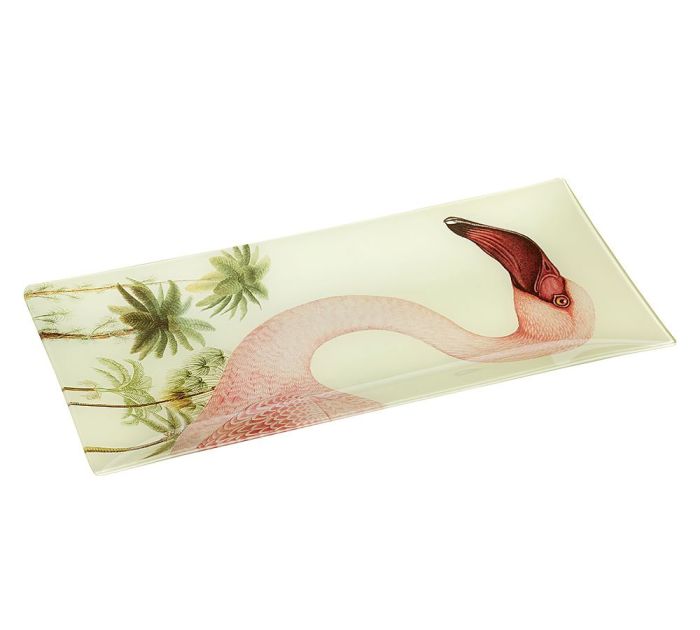
Decoupage trays, once a niche craft, are experiencing a resurgence in popularity. This renewed interest fuels anticipation for the evolution of designs, materials, and techniques. The craft’s adaptability and the ever-changing aesthetic landscape promise exciting developments.The future of decoupage trays will likely see a blending of traditional techniques with modern aesthetics. Expect a move away from overly ornate designs towards more minimalist and contemporary styles.
This trend will be reflected in the choice of decoupage materials, as well as the trays themselves.
Emerging Design Trends
Decoupage trays are poised to move beyond the traditional floral and vintage themes. Expect a rise in geometric patterns, bold colors, and abstract designs. This evolution reflects a broader trend in home décor, with a move toward more personalized and expressive pieces. The incorporation of nature-inspired elements, such as botanical prints or textures, will likely remain popular, but with a more modern interpretation.
Innovative Materials and Techniques
The decoupage world is witnessing the emergence of new materials and techniques. Recycled materials, like reclaimed wood or repurposed fabrics, will become more prevalent in tray creation. This reflects a growing awareness of sustainability and eco-conscious design. Similarly, new adhesive techniques and finishes will provide more versatility and longevity to the craft. The use of metallic foils and embossing techniques are also expected to increase, adding a touch of luxury and texture to decoupage trays.
Impact of New Technologies
Digital design tools and printing technologies are likely to play an increasingly important role in decoupage. Pre-printed designs and customized digital art can be easily incorporated into tray projects, broadening the scope of design possibilities. 3D printing may also introduce new avenues for tray creation, offering intricate designs and complex shapes. The use of digital tools will further democratize the decoupage process, making it more accessible to a wider audience.
Evolution of Decoupage Trays
The future of decoupage trays will likely see them move beyond functional items to serve as decorative statement pieces. Trays will be incorporated into larger design schemes, becoming integral parts of room decor, reflecting a broader artistic vision. The trend toward personalized items suggests that decoupage trays will become increasingly tailored to individual tastes and preferences. For example, trays with personalized monograms or unique designs reflecting the owner’s interests are likely to gain popularity.
Final Conclusion
In conclusion, decoupage trays provide a canvas for creativity, allowing you to tailor your designs to match your style and the intended function. This guide has provided a detailed roadmap to mastering the art of decoupage, from the initial design concept to the final, polished product. With careful consideration of materials, techniques, and design choices, you can transform a simple tray into a personalized masterpiece that enhances your home décor.